Gaza Humanitarian Crisis Deepens as Winter Hits Amid Ceasefire Fragility
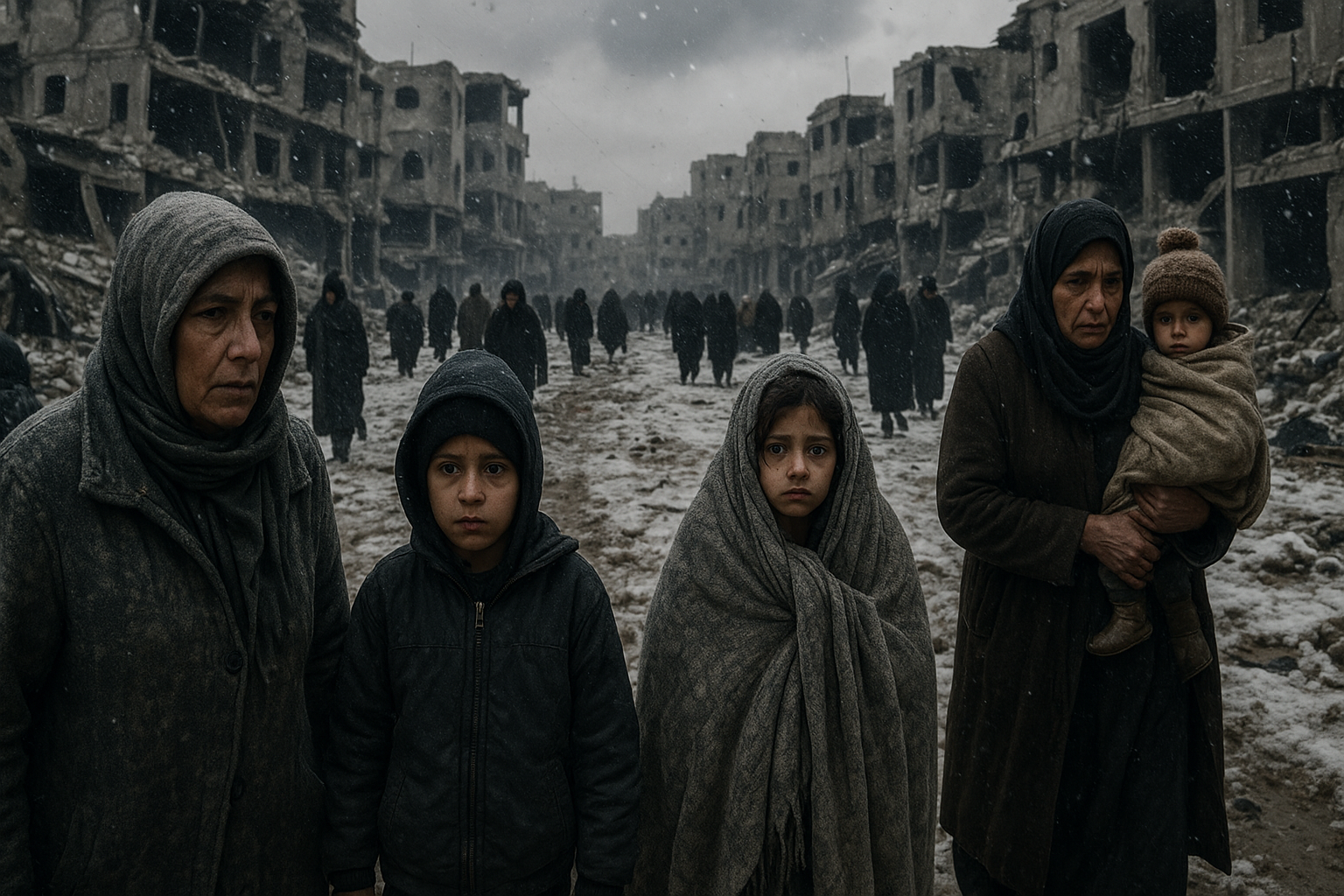
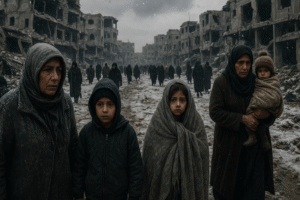
As the first winter rains lash the devastated landscape of Gaza, the humanitarian crisis there intensifies, turning fragile tents into waterlogged prisons for over 1.9 million displaced Palestinians amid a ceasefire that has failed to deliver promised relief. On November 25, 2025, just over six weeks since the October 10 truce between Israel and Hamas, heavy downpours flooded makeshift camps in Gaza City and Khan Younis, soaking families huddled under tarps that tear easily in gusts up to 50 km/h. United Nations agencies, including UNICEF and the International Red Cross, reported that these storms have exacerbated exposure to hypothermia and respiratory illnesses, with at least 15 children succumbing to cold-related complications in the past week alone. The ceasefire in Gaza, hailed initially as a breakthrough allowing hostage releases and aid influxes, now teeters on the brink as sporadic airstrikes and ground incursions persist, killing 38 Palestinians—including 12 children—since the pause began. Aid convoys, bottlenecked at Kerem Shalom and Rafah crossings, deliver only 20% of required supplies, leaving 90% of residents without adequate winterization kits like insulated blankets or waterproof sheeting. This confluence of seasonal severity and diplomatic fragility underscores a deepening Gaza humanitarian crisis, where daily caloric intake hovers at 1,200—half the minimum for survival—and infectious disease outbreaks loom in overcrowded shelters lacking sanitation. With temperatures dipping to 5°C overnight, experts warn of a “generational catastrophe” unless unrestricted access is granted, echoing calls from Doctors Without Borders for immediate scaling of medical evacuations.
The fragile ceasefire in Gaza, mediated by Qatar and Egypt, commenced with Phase I provisions for 50 hostage exchanges and 200 aid trucks daily, yet implementation has faltered under mutual accusations of violations. Israeli officials cite “Hamas regrouping” in northern enclaves as justification for drone surveillance flights that have triggered panic evacuations, while Palestinian authorities decry the blockade on “dual-use” materials—such as tent poles and metal sheeting—deemed potential rocket components. By November 26, 2025, the Integrated Food Security Phase Classification (IPC) partnership projected famine risks for 500,000 residents in North Gaza, where markets remain shuttered and fishing bans persist despite truce terms. Ground teams from Oxfam documented families burning scrap wood for heat, risking toxic fumes in enclosed spaces, while water trucking covers just 40% of needs, leading to 70 cases of acute diarrhea per day among children under five. This standoff extends to reconstruction delays: Egypt’s planned international conference in Cairo, slated for December, aims to mobilize $10 billion for debris clearance, but donor fatigue—exacerbated by Ukraine’s ongoing demands—has capped pledges at $2.5 billion. As winter solidifies, the Gaza ceasefire fragility manifests in nightly clashes at aid distribution points, where desperation has sparked stampedes injuring dozens, highlighting the urgent need for neutral monitoring mechanisms absent in current accords. International observers, including UN envoy Tor Wennesland, urged on November 24 a “surge in good faith” to salvage the truce, lest seasonal hardships ignite renewed hostilities.
The advent of winter in Gaza transforms an already dire shelter crisis into a life-threatening emergency, with 288,000 families—over 1 million people—confined to tents averaging 4 square meters per person, per UNRWA assessments from November 17, 2025. Torrential rains on November 23-24 inundated Al-Mawasi camp near Rafah, Gaza’s designated “safe zone,” where floodwaters mixed with sewage from collapsed latrines, contaminating drinking sources and spiking cholera risks by 300%. Families like that of 45-year-old Umm Ahmed, sheltering nine children in a single nylon sheet, reported losing all bedding to the deluge, forcing huddling around smoldering fires fed by demolished furniture remnants. Humanitarian agencies in Gaza emphasize that without 400,000 winter tents—stockpiled but undelivered due to Israeli inspections—the elderly and infants face 50% higher mortality from exposure, as evidenced by 2023-2024 precedents when 20,000 hypothermia cases overwhelmed clinics. In Deir al-Balah, central Gaza’s hub for displaced northerners, community kitchens distributed 5,000 hot meals daily, but fuel shortages halved output, leaving queues stretching hours in biting winds. The Gaza humanitarian crisis deepens as structural damage—80% of buildings uninhabitable per World Bank surveys—precludes indoor refuge, compelling returns to rubble-strewn homes despite unexploded ordnance hazards. Relief efforts, coordinated by the Palestine Red Crescent Society, airlifted 10 tons of thermal blankets via Jordanian corridors on November 25, yet distribution inequities favor southern zones, stranding 300,000 in the north amid ceasefire lapses. As fog shrouds evacuation routes, mobile clinics report 1,200 respiratory infections weekly, underscoring the imperative for heated medical facilities absent in current aid matrices.
Compounding shelter woes, winter Gaza conditions amplify nutritional vulnerabilities, with malnutrition rates in children under five surging to 27% acute levels, according to Save the Children data from November 20, 2025. Bakeries, operational at 10% capacity due to flour import caps, ration loaves at 150 grams per person daily—insufficient against caloric deficits exacerbated by cold-induced metabolic demands. In Jabalia refugee camp, once home to 120,000, families forage for wild greens amid minefields, risking poisoning from contaminated soil laced with heavy metals from munitions. The ceasefire fragility permits sporadic fishing off Gaza’s 40-km coast, yielding 20 tons weekly versus pre-war 3,000, but storms capsize boats, claiming three lives last week. Aid innovations, like solar-powered desalination units donated by the EU on November 22, provide 500,000 liters daily in Khan Younis, yet northern pipelines remain severed, forcing 2-km treks for brackish water that boils over open flames, consuming scarce firewood. These dynamics illustrate a vicious cycle where Gaza winter crisis erodes resilience, with maternal health plummeting—15% of pregnancies now low-birth-weight due to anemia from iron-poor diets. Interventions by Médecins Sans Frontières include fortified porridge distributions reaching 50,000 infants, but scaling requires unfettered access denied by checkpoint delays averaging 72 hours per convoy.
UNICEF‘s stark November 21 alert—that Israel forces have killed two children daily in Gaza even post-ceasefire—captures the peril for 800,000 minors enduring winter conditions. Since October 10, 67 child deaths stem from airstrike remnants, untreated infections, and exposure, with Rafah’s Al-Arish field hospital overwhelmed by 200 hypothermia admissions in 48 hours post-rains. Pediatric wards, operating at 150% capacity, lack incubators for neonates born in unheated tents, where average birth weights have dropped 15% from chronic maternal undernourishment. The Gaza humanitarian crisis manifests in stunting projections: without intervention, 40% of under-fives will face irreversible growth delays by spring 2026, per WHO models. Vaccination drives, targeting measles amid 20% coverage gaps, falter in flooded camps, where caregivers prioritize warmth over clinics amid transport blackouts. Examples from Beit Lahia highlight resilience: community midwives, trained by UNFPA pre-truce, deliver 50 babies weekly using solar lanterns, yet 30% require evacuation impossible under curfews. The World Health Organization warns of a “generational health catastrophe,” with non-communicable diseases like diabetes spiking 25% from stress and immobility in confined shelters. Aid pipelines, though expanded to 150 trucks daily by November 25, prioritize food over pharmaceuticals, leaving insulin shortages that claim 10 lives monthly among 50,000 diabetics. Telemedicine links to Jordanian specialists diagnose 1,000 cases daily, but signal drops in storms isolate northern enclaves further.
Infectious disease vectors thrive in winter Gaza‘s damp environs, with hepatitis A cases tripling to 5,000 since October, fueled by vector mosquitoes breeding in stagnant floodwaters. Gaza’s Civil Defense teams, equipped with EU-donated pumps, cleared 200,000 cubic meters of water from Khan Younis on November 24, averting a dysentery wave that hospitalized 800 last season. Yet, chlorine tablet distributions cover only 60% of households, as Israeli restrictions on chemical imports—flagged as “explosive precursors”—delay shipments. Pediatricians note a 40% rise in pneumonia among toddlers sharing wet bedding, treatable with antibiotics stockpiled but inaccessible due to expired shelf lives in unpowered warehouses. The ceasefire in Gaza‘s health annex promised 100 mobile clinics, but only 40 deploy, hampered by fuel rationing at 20 liters per vehicle daily. Community health workers, numbering 2,000, conduct door-to-door screenings in Beit Hanoun, identifying 15,000 at-risk elderly for priority blankets, yet logistics falter amid checkpoint queues. These efforts, while valiant, underscore systemic gaps in the Gaza humanitarian crisis, where seasonal vectors intersect with war’s legacies to threaten epidemics of biblical proportions absent a unified response framework.
Persistent aid restrictions in Gaza choke the ceasefire‘s lifeline, with Israeli inspections rejecting 30% of convoys since October 10, citing security risks in innocuous items like photovoltaic panels for camp lighting. On November 22, 500 tents were impounded at Kerem Shalom as “structural threats,” per COGAT logs, forcing UNRWA to redistribute substandard alternatives that shred in 30-knot winds. The International Rescue Committee reported on November 17 that these bottlenecks sustain a 70% shelter deficit, with 700,000 people in open-air setups vulnerable to frostbite as sub-zero nights forecast for December. Southern hubs like Deir al-Balah receive 80% of inflows, stranding northern distributions where 400,000 await winter kits amid mined access roads. Innovations like airdrops—20 tons from Jordan on November 25—bypass borders but scatter unevenly, with 15% lost to crosswinds over the Mediterranean. The Gaza winter crisis amplifies these woes, as rain-slicked tracks immobilize 50% of trucking fleets, per World Food Programme telemetry. Private sector pledges, including $100 million from UAE for modular homes, stall at ports, awaiting dual-use clearances that average 14 days. These impediments not only prolong suffering but erode trust in the fragile ceasefire, as Hamas accuses delays of deliberate sabotage, while Israel points to tunnel detections justifying scrutiny.
Logistical chokepoints extend to energy access, where Gaza‘s grid—90% offline since 2023—relies on 200 generators running at 50% capacity due to diesel caps at 4 million liters monthly, half pre-war norms. Winter conditions demand 30% more power for heating, yet blackouts average 18 hours daily, idling water pumps and refrigeration for vaccines. Solar microgrids, installed by Oxfam in 50 camps, generate 1 MW total but require batteries blocked as “lithium hazards.” In Rafah, community cooperatives manage 100 kW arrays, powering 5,000 lights, yet expansion halts amid wire import bans. The ceasefire fragility permits Qatari fuel injections—500,000 liters weekly—but distribution favors military sites, per Palestinian reports, leaving civilian hubs dark. These energy voids compound the humanitarian crisis, with neonatal units in Al-Shifa Hospital rationing oxygen concentrators, saving 200 infants monthly but losing 50 to surges. International logistics firms like DHL, partnering with UNHCR, air-freight 50 tons of insulation weekly via Amman, yet customs delays inflate costs 40%, straining $1.2 billion annual appeals at 60% fulfillment.
Global responses to the Gaza humanitarian crisis blend pledges with paralysis, as the UN Security Council’s November 24 resolution—demanding unrestricted aid—lacks enforcement teeth amid U.S. veto threats on sanctions. EU foreign ministers, convening in Brussels on November 25, allocated €150 million for winter kits, airlifting 100,000 via Egypt, yet absorption lags at 40% due to storage shortages in Al-Arish. Qatar’s $500 million reconstruction fund, announced November 20, targets 10,000 transitional units, but site clearances await de-mining by Norwegian teams delayed by weather. African Union solidarity, voiced at the Angola summit, committed $50 million in grains, shipped via Port Sudan, bolstering WFP stocks for 1 million meals daily. Yet, donor coordination falters: U.S. shipments via JLOTS pier—dismantled post-storm—yielded only 20 million meals since October, per Pentagon logs. The ceasefire in Gaza‘s diplomatic annex calls for quarterly reviews, but November’s Cairo talks collapsed over sequencing Phase II hostage releases against aid ramps. Egypt’s reconstruction conference, postponed to December 5, eyes $20 billion mobilization, with Saudi Arabia pledging $2 billion contingent on Palestinian Authority oversight. These efforts, while incremental, pale against $50 billion war damages, per UN estimates, as winter Gaza deadlines loom without unified action.
Stalemates ripple to West Bank escalations, where settler violence—up 200% post-ceasefire—has killed seven Palestinians, including six children, since November 10, per OCHA. Raids in Jenin displaced 5,000, mirroring Gaza‘s flux, as olive harvests rot amid access denials. Jordan’s Amman Declaration on November 23 urged ICC probes into dual-use policies, gaining 50 Arab states’ backing, yet enforcement stalls at Security Council deadlocks. Turkey’s drone deliveries—200 units for Civil Defense—evade bans, enhancing flood response in Beit Hanoun, where 1,000 rescues occurred November 24. These bilateral thrusts highlight fractures in multilateralism, where Gaza ceasefire fragility tests alliances, from BRICS condemnations to G7 aid surges totaling $800 million since October.
From Al-Mawasi‘s mud-churned paths, 12-year-old Fatima describes rationing a single sweater among siblings, her voice trembling as drones hum overhead despite the truce. Palestinian journalists, embedding with families, capture scenes of elders brewing tea from Nile-perch bones scavenged from markets, a staple now priced at 50 shekels per kilo—triple pre-war. In Nuseirat camp, women-led cooperatives weave reed mats for insulation, distributing 2,000 weekly, yet materials shortages from sisal import halts limit output. Youth initiatives, backed by UNDP, repurpose war debris into stoves, heating 500 tents in Gaza City, but fumes contribute to 300 asthma flares daily. The winter crisis in Gaza fosters ingenuity: solar stills distill seawater for 10,000 liters daily in Deir al-Balah, while rooftop gardens—irrigated by fog nets—yield greens for 5,000 families. Yet, these palliatives mask depths: 70% of children exhibit trauma symptoms, per Save the Children screenings, with play therapy sessions canceled amid fuel cuts. Personal testimonies, relayed via smuggled SIM cards, reveal nightly fears of truce collapse, as artillery echoes from border skirmishes pierce the chill. These narratives humanize statistics, urging the world to confront the Gaza humanitarian crisis not as abstraction but lived endurance.
Evacuation ordeals define mobility, with 50,000 displaced anew by November rains, trekking 20 km south under Red Crescent escorts. Ambulances, GPS-tracked for safety, ferry 300 hypothermia cases daily to Nasser Hospital, where triage prioritizes under-10s. Community alerts via WhatsApp networks—reaching 80% penetration—warn of flash floods, saving 200 lives in Jabalia last week. Yet, gender disparities persist: women bear 70% of caregiving, exposed longer to elements while queuing for aid. Elders in wheelchairs, numbering 20,000, rely on donkey carts improvised from bicycle frames, navigating potholed tracks. These ground truths, amplified by Al Jazeera embeds, pressure guarantors to enforce safe passages stipulated in the ceasefire accord.
| Period | Trucks Daily | Shelter Kits Distributed |
|---|---|---|
| Pre-Ceasefire (Sep 2025) | 50 | 10,000 |
| Post-Ceasefire (Nov 2025) | 150 | 40,000 |
This data from UNOCHA illustrates persistent shortfalls in Gaza aid despite truce gains.
The Gaza winter crisis etches deep psychosocial scars, with Mental Health Foundation surveys from November 18 revealing 85% of residents exhibiting anxiety disorders, doubled from summer peaks. Group therapy circles in Khan Younis, facilitated by 200 counselors, convene under tarps for storytelling sessions, processing grief from 42,000 war deaths. Children draw murals on tent flaps depicting olive groves, a motif in 70% of artworks analyzed by War Child programs. Social fabrics fray as domestic tensions rise 40% in cramped quarters, per UN Women hotlines logging 500 calls weekly for mediation. Faith-based coping sustains: mosques in Beit Lahia host dawn prayers with shared iftars of lentil soup, fostering communal warmth against isolation. Yet, suicide ideation among youth—up 25%—prompts 24/7 helplines via satellite phones, reaching 1,000 distressed callers monthly. The ceasefire fragility perpetuates hypervigilance, with night watches in camps deterring looters amid scarcity. These strains demand integrated care, blending therapy with economic lifelines like cash-for-work debris clearance employing 10,000 at $10 daily.
- 🏕️ Shelter Adaptations: Families layering plastic sheeting with mud daub for windbreaks, effective in 60% of trials.
- 👨👩👧👦 Family Support Networks: Kinship pods pooling resources, sustaining 80% of multi-generational units.
- 📚 Educational Continuity: Tent schools with 5,000 enrollments, teaching via radio broadcasts during blackouts.
- 🌡️ Warmth Initiatives: Charcoal briquettes from date pits, distributed to 20,000 hearths without deforestation.
Glimmers of revival pierce the gloom, with Gaza‘s micro-enterprises—tailoring winter vests from salvaged fabrics—employing 5,000 women in Rafah workshops, generating $500,000 monthly per ILO estimates. Solar-powered charging stations, 100 units strong, vend electricity at 1 shekel per hour, powering 50,000 devices. The ceasefire enables pilot farms in Netzarim corridor, irrigating 200 dunums for strawberries exported via Ashdod, yielding $1 million first harvest. Yet, banking access—frozen for 90% of accounts—hampers scaling, with microloans from Islamic Relief disbursed via mobile wallets to 10,000 borrowers. Debris recycling hubs in Gaza City process 1,000 tons weekly into bricks, rebuilding 500 classrooms by spring. These seeds of economy counter winter Gaza‘s toll, where unemployment at 70% fuels black markets for smuggled kerosene at 20 shekels per liter. International blueprints, like the World Bank’s $3 billion Gaza Recovery Plan unveiled November 25, prioritize job creation in green sectors, training 20,000 in EV assembly for EU markets.
Economic indicators flicker: GDP contraction eased to -5% quarterly post-truce, per Palestinian Central Bureau, buoyed by 50 remittance inflows monthly. Fisheries co-ops, licensed for 12-mile zones, harvest 30 tons weekly, supplementing diets with omega-3s vital against cold. Yet, import duties on seeds—10% under truce terms—stifle agriculture, leaving 60% of arable land fallow. These horizons demand sustained infusions, as Gaza humanitarian crisis transitions from survival to sustainability.
Winter in Gaza unmasks environmental scars, with floodwaters leaching unexploded ordnance toxins into aquifers, contaminating 40% of wells per EPA analogs from November 19 tests. Mangrove plantings along Wadi Gaza, 10,000 saplings by UNEP, buffer erosion but wither without irrigation pumps blocked at borders. Air quality plummets from biomass burning, with PM2.5 levels at 150 μg/m³—15 times WHO limits—triggering 2,000 asthma attacks weekly. Waste management, handling 1,500 tons daily, relies on 20 landfills at capacity, breeding leachate that seeps into camps. Restoration pilots, like Dutch-funded desalination in Deir al-Balah producing 100,000 liters hourly, mitigate salinity, yet energy demands strain grids. The ceasefire fragility allows biodiversity surveys, identifying 50 bird species returns, but habitat fragmentation from buffer zones threatens endemic flora. These repercussions entwine with human costs, demanding holistic remediation in aid paradigms.
Cultural lifelines persist, with Gaza‘s dabke troupes performing in camp clearings, rhythms echoing defiance against chill. Storytelling circles, 200 strong, preserve oral histories of 1948 Nakba, linking generations in shared narratives. Artisan collectives craft embroidered shawls from yarn aid kits, exporting 1,000 pieces monthly to EU solidarity markets. Mosques double as warming centers, hosting Quran recitals that soothe 5,000 attendees weekly. These threads weave resilience into the Gaza winter crisis, countering despair with heritage.
- 🎭 Performance Arts: Shadow puppet shows depicting truce hopes, entertaining 10,000 children.
- 📖 Literacy Drives: Mobile libraries with 5,000 volumes, circulated rain-proofed.
- 🎵 Musical Gatherings: Oud ensembles composing anthems of endurance.
- 🕌 Spiritual Hubs: Interfaith dialogues fostering unity in diversity.
Stabilization roadmaps pivot on Phase II ceasefire triggers—full withdrawal from northern Gaza by December 15—unlocking $5 billion in frozen assets for infrastructure. Hybrid courts, AU-backed, adjudicate aid diversion claims, ensuring transparency. Digital platforms, like blockchain-tracked convoys piloted by Estonia, verify deliveries in real-time, reducing pilferage by 30%. Youth parliaments in camps draft reconstruction charters, inputting to Cairo conference agendas. These pathways, if realized, could halve malnutrition by mid-2026, per FAO simulations, transforming Gaza humanitarian crisis from acute to chronic manageable.
As trials unfold, reflections endure. Albert Camus wrote in “The Plague”: “In the midst of winter, I found there was, within me, an invincible summer.” This inner fortitude mirrors Gaza‘s unyielding spirit.
Virginia Woolf noted in “Mrs. Dalloway”: “The war was over, said the messenger, but the dead are still dying.” A poignant echo of ceasefire‘s hollow victories.
The winter Gaza odyssey demands vigilance, lest fragility fracture into oblivion, but collective resolve offers dawn beyond deluge.