Putin’s Winter Offensive Launches with 450 Drones, 30 Missiles
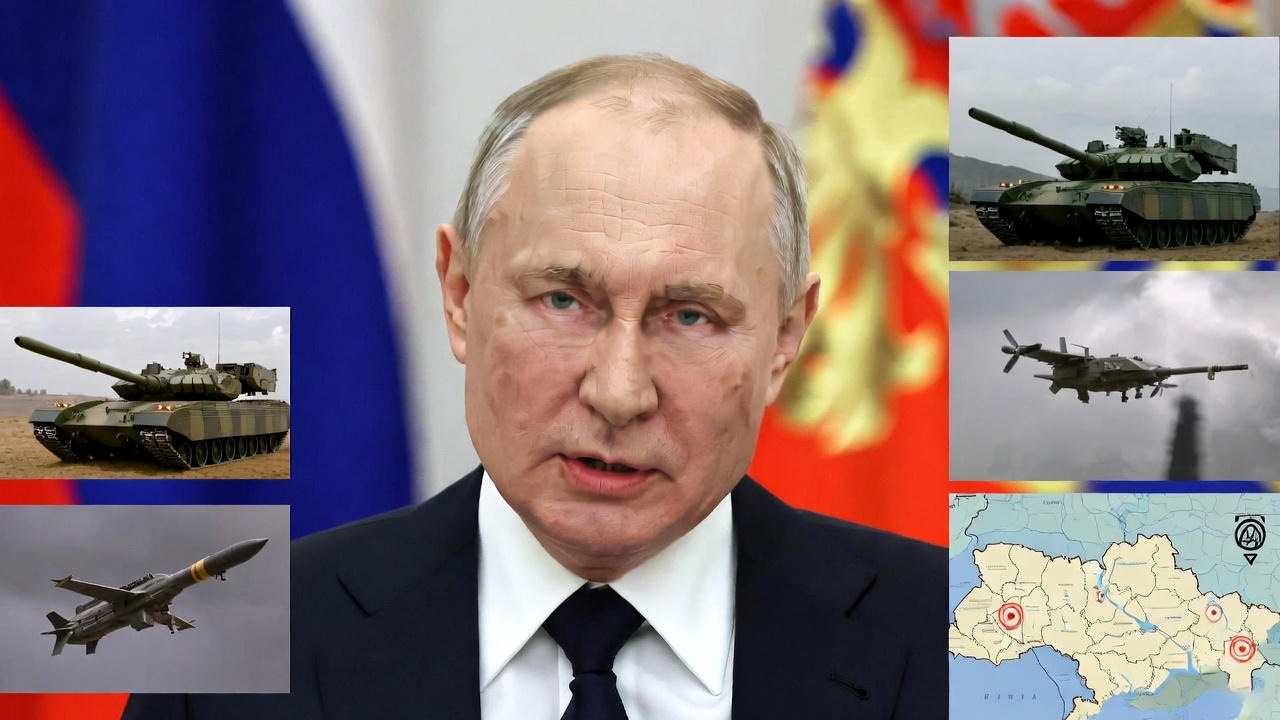
In the early hours of November 8, 2025, Russian forces initiated a significant escalation in the ongoing Russia-Ukraine conflict by launching a massive barrage involving over 450 drones and approximately 45 missiles. This operation targeted key energy facilities across multiple regions in Ukraine, marking the beginning of what has been described as Putin’s winter offensive. The strikes focused on disrupting power grids, heating systems, and other critical infrastructure as temperatures drop, aiming to weaken Ukrainian resilience during the colder months. Officials reported that the attacks caused widespread blackouts, affecting millions and highlighting the strategic intent behind the winter campaign. The Ukrainian air force managed to intercept a substantial portion of the incoming threats, but the sheer volume overwhelmed defenses in several areas, leading to direct hits on both civilian and industrial sites.
The assault began overnight from November 7 to 8, with drones and missiles originating from various locations including Kursk, Voronezh, and Rostov oblasts in Russia, as well as the Black Sea and occupied Crimea. Among the weapons deployed were Iskander-M/KN-23 ballistic missiles, Iskander-K cruise missiles, Kh-47M2 Kinzhal aeroballistic missiles, and Kalibr missiles, alongside hundreds of Shahed-type and Gerbera-type drones. This coordinated effort represented one of the largest single-night operations since the full-scale invasion in February 2022, underscoring Moscow’s commitment to a prolonged attrition strategy against Kyiv. As a result, emergency services across Ukraine were mobilized to address fires, structural damage, and power restoration, with generators being deployed in affected cities to maintain essential services like water supply.
The scale of the drone strikes was unprecedented, with Russian military deploying approximately 458 drones, of which around 300 were identified as Shahed-type models known for their low-cost production and long-range capabilities. These unmanned aerial vehicles were launched in waves, creating a saturation effect that challenged Ukrainian air defenses. Reports indicate that 406 drones were successfully downed, but 52 managed to reach their targets, causing significant disruptions. Complementing the drone swarm were 45 missiles, including 25 ballistic missiles and seven aeroballistic missiles, which struck with high precision at energy hubs. The combination of these weapons allowed Russian forces to target dispersed locations simultaneously, from central Poltava to eastern Kharkiv.
In Dnipro, a drone impacted a residential tower block, resulting in immediate rescues amid collapsing structures. Visual accounts showed emergency responders pulling survivors from rubble, with fires spreading to adjacent buildings. Similarly, in Kyiv, debris from intercepted missiles damaged high-rise apartments, schools, and medical facilities across nine districts. The attacks extended to Odesa, where an energy facility caught fire, and Zaporizhzhia, where residential areas bore the brunt of the explosions. Ukrainian officials noted that the strikes were designed to maximize impact on civilian life, with falling debris alone injuring dozens and complicating recovery efforts.
Expanding on the tactical approach, Russian defense ministry claimed the operation was a “massive strike” against Ukrainian weapons production and energy sites in retaliation for prior Ukrainian drone attacks on Russian territory. This included hits on substations and refineries in Saratov and Volgograd oblasts. However, the primary focus remained on degrading Ukraine’s power infrastructure, with specific strikes on the Kremenchuk Hydroelectric Power Plant in Kirovohrad Oblast involving nearly 15 drones and two missiles. This facility, crucial for regional electricity, suffered extensive damage, halting operations and requiring urgent repairs.
The human toll from this winter offensive launch was severe, with at least seven confirmed deaths reported initially, later revised to eight as more details emerged from affected regions. In Dnipro, two individuals perished when a drone struck an apartment building, wounding 12 others, including children. Rescuers worked through the night, navigating unstable structures to extract trapped residents, with accounts of screams echoing amid the chaos. In Zaporizhzhia, three people lost their lives in strikes on residential sites, while Kharkiv reported one fatality at a gas infrastructure facility.
In Kyiv, the capital bore significant casualties, with six deaths attributed to debris from downed missiles and drones. Among the injured were 34 people, including two children and a pregnant woman, treated in local hospitals. A resident named Anastasia recounted the terror: “At that moment you don’t know what to do first: save yourself, your child, or run to help people, because so many people were screaming and needed help.” Such personal stories illustrate the psychological strain on civilians enduring repeated aerial assaults. Additional injuries occurred in Chornomorsk, where two deaths were reported at a market hit by drones, and in surrounding areas where fires from strikes injured a seven-year-old child among others.
The broader impact extended to displacement and service disruptions. Thousands in Poltava, Kharkiv, and Kyiv regions faced power outages, forcing reliance on generators for heating and water. In Horishni Plavni, municipal services switched to backup systems to prevent total collapse of utilities. These incidents compound the ongoing humanitarian challenges in the Russia-Ukraine war, where winter conditions exacerbate vulnerabilities for populations already strained by nearly four years of conflict.
The missile and drone attacks inflicted substantial damage on Ukraine’s energy sector, aligning with Russia’s strategy to cripple the grid ahead of winter. Key facilities like the Zmievska Thermal Power Plant in Kharkiv Oblast and the Trypilska Thermal Power Plant in Kyiv Oblast were hit, causing fires and halting electricity production. These plants, which together supplied 14 percent of Ukraine’s electricity, had been partially restored after earlier strikes in 2024, but the November 8 assault reversed those gains with an intense barrage of several weapons per minute.
In Poltava Oblast, strikes on energy sites in Horishni Plavni led to widespread blackouts, with fires requiring immediate intervention. The Kremenchuk Hydroelectric Power Plant faced multiple hits, disrupting output and affecting downstream regions. Odesa Oblast reported fires at an infrastructure facility, while Kharkiv saw damage to gas installations, killing an operator. Railway infrastructure was also targeted, with strikes on a depot in Hrebinka causing train delays and power issues at stations.
Power cuts spread to Dnipropetrovsk, Chernihiv, Odesa, and Kirovohrad oblasts, prompting rapid restoration efforts. Critical infrastructure was prioritized, with generators ensuring continuity for hospitals and water systems. The attacks on gas facilities marked the ninth such incident in two months, according to Naftogaz, emphasizing the repeated targeting of energy resources to undermine Ukrainian economy and morale.
Ukrainian air defenses demonstrated resilience by intercepting 406 drones and nine missiles from the incoming salvo, mitigating what could have been even greater destruction. Systems like mobile anti-air units and advanced radar tracked the waves of attacks, downing threats over populated areas. However, 26 missiles and 52 drones evaded defenses, striking 25 locations, with debris impacting four more.
In retaliation, Ukrainian forces conducted drone strikes on Russian targets, including an electricity substation in northern Russia and a residential building in Saratov, wounding two. Additional strikes hit the Baloshovskaya Electric Substation in Volgograd Oblast and the Belozerskaya substation in Vologda Oblast, causing localized power outages. Kyiv has intensified such operations, targeting Russian oil facilities to disrupt funding for the war, with recent attacks halting exports at Novorossiysk port.
President Volodymyr Zelenskyy highlighted the response: “Ukraine is responding to these strikes with long-range strength, and the world must stop these attacks on life with sanctions.” This counter-strategy includes ramping up drone production and deep strikes into Russian territory to balance the asymmetry in the conflict.
Following the strikes, Zelenskyy urged intensified sanctions on Russian energy, stating: “For every Moscow strike on energy infrastructure – aimed at harming ordinary people before winter – there must be a sanctions response targeting all Russian energy, with no exceptions.” He emphasized the need for decisions from the US, Europe, and G7 to pressure Moscow.
The attacks occurred amid debates on sanctions, including a recent US exemption for Hungary to purchase Russian oil, despite blacklisting major companies. Former Nato secretary general Anders Fogh Rasmussen warned of a “forever war” without increased European pressure. Negotiations for a truce have stalled, with Russia rejecting proposals to freeze frontlines, insisting on “long-term, sustainable peace.”
Global observers noted the timing, as US President Donald Trump called for ending the war by freezing lines, a position endorsed by Zelenskyy but dismissed by Russian foreign minister Sergei Lavrov. The incident also damaged the Azerbaijani Embassy in Kyiv from debris, prompting diplomatic concerns.
The Russia-Ukraine war, which began with the full-scale invasion in February 2022, has seen repeated winter offensives aimed at exploiting cold weather to strain Ukrainian resources. Previous seasons witnessed similar escalations, with energy attacks becoming a hallmark of Russian tactics. For instance, in late 2024, strikes damaged multiple power plants, leading to rolling blackouts and international aid for repairs.
This latest operation builds on patterns observed in October 2025, when Russia launched over 3,000 drones, 92 missiles, and nearly 1,400 glide bombs in a single week. The focus on energy infrastructure mirrors efforts to collapse the Ukrainian economy, as seen in prior hits on thermal power plants and hydro facilities. The conflict, the largest in Europe since World War II, has resulted in massive displacement and economic losses, with winter campaigns intensifying humanitarian needs.
Russian advances in eastern Ukraine, such as capturing villages near Pokrovsk, accompany these aerial operations, creating a multi-front pressure. Ukrainian resilience has been bolstered by Western support, including air defense systems, but the volume of attacks tests these capabilities.
To illustrate the escalation in Russian strikes, consider the following data on major assaults:
| Attack Period | Drones Launched | Missiles Launched |
|---|---|---|
| October 5-12, 2025 | 3,000+ | 92 |
| October 30, 2025 | 650+ | Unspecified |
| November 7-8, 2025 | 458 | 45 |
This table highlights the increasing frequency and scale of drone and missile deployments in the winter offensive.
Amid the aerial barrage, Russian forces continued ground advances in the Pokrovsk direction, a critical area in eastern Ukraine.
- 🚀 Advances in Myrnohrad and Rivne: Marginal gains were made into northern Myrnohrad and western Rivne, with seizures along key highways like T-0515.
- 🛡️ Contested Zones in Pokrovsk: Much of Pokrovsk remains a gray zone, with Russian elements in northern and southern sectors, avoiding full footholds to push northward.
- 💥 Assault Tactics: Small groups approached highways, engaging in urban combat while using civilian disguises, violating international norms.
- 📍 Reinforcements and Defenses: Strong positions established near Razine, with troops moving toward Zatyshok and Krasnyi Lyman.
- 🌐 Broader Attacks: Operations occurred northwest, north, northeast, east, southeast, south, and southwest of Pokrovsk, targeting villages like Hryshyne, Fedorivka, and Novohrodivka.
Ukrainian counterattacks focused on Fedorivka, Rodynske, and toward Hryshyne, partially restoring logistics and ammunition supplies.
Various Russian brigades participated in the operations:
- ⚔️ 51st Combined Arms Army Units: Including the 110th, 114th, and 1st motorized rifle brigades, operating northeast of Pokrovsk.
- 🔭 68th Army Corps: The 39th Motorized Rifle Brigade struck positions in the area.
- 🛩️ Air Defense and Drone Operators: Tor-M2 systems from the 27th Motorized Rifle Division, FPV drones from the 80th Sparta Battalion, and Kaira detachments targeted Ukrainian forces.
These units reflect the integrated approach combining ground and aerial elements in the winter offensive.
As winter sets in, the attacks signal a strategy to erode Ukrainian defensive resilience, with analysts noting this as a test for the fourth winter of invasion. Power shortages could hamper military operations and civilian life, prompting increased aid requests. Examples from previous winters show how such tactics lead to humanitarian crises, with blackouts affecting healthcare and food storage.
In a related development, Ukrainian strikes on Russian infrastructure continue, such as those causing explosions near the Saratov Oil Refinery and disrupting power in Volgograd.
Amid the devastation, reflections on war resonate. As Sun Tzu wrote in “The Art of War”: “The supreme art of war is to subdue the enemy without fighting.” This ancient wisdom contrasts with the current brute-force approaches seen in the Russia-Ukraine conflict.
Similarly, Leo Tolstoy observed in “War and Peace”: “The two most powerful warriors are patience and time.” This highlights the enduring nature of such protracted struggles, where winter offensives test the limits of endurance.
Recovery efforts are underway, with energy companies working to restore services in affected regions. In Kremenchuk and Horishni Plavni, generators maintain water supplies, while in Kyiv, hospitals operate on backups. The strikes have delayed trains and disrupted logistics, but Ukrainian railways aim for quick resumption.
Looking ahead, Russian forces may intensify operations as reinforcements arrive, while Ukraine seeks enhanced sanctions and military aid to counter the winter campaign. The conflict’s trajectory remains tied to international support and the effectiveness of defenses against escalating drone and missile threats.